

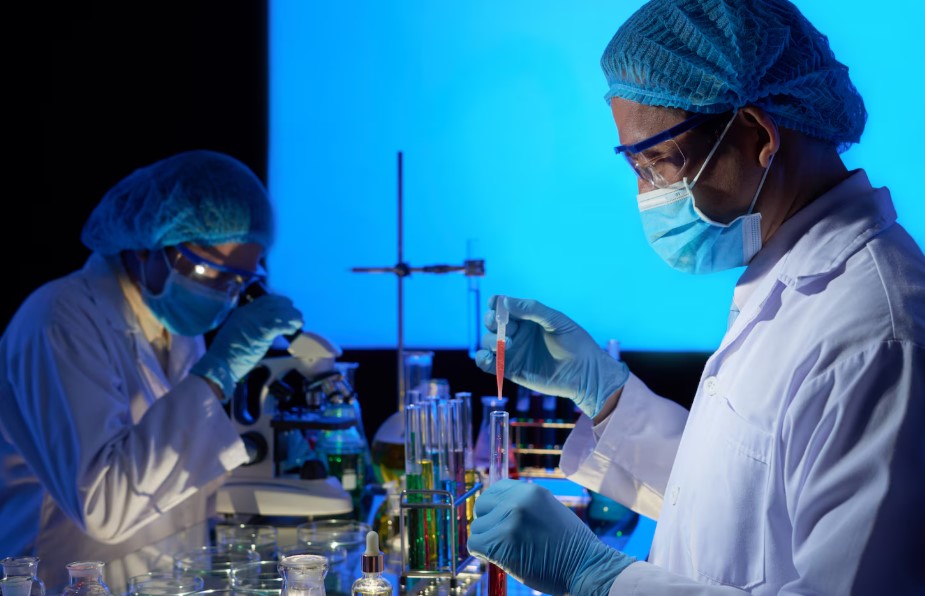
Biotechnology is at one critical crossroads in the year 2026. The last few years have shown an unbelievable course of events: technology has ceased to be a tool but now it has become a cooperative ally. The changes in laboratories at a rate of artificial intelligence (AI), automation, and robotics are like no previous industrial transition. To biotechnologists, one can say that this phenomenon is not just a trend but a significant opportunity to radically transform the diagnostics of diseases, genomic research, and creating life-saving solutions.
It was the fear of many professionals that machines would replace the expertise of humans. The truth of the matter however is quite the opposite. The development of artificial intelligence and robotics in the laboratory environment is enhancing scientists and not replacing them. A biotechnologist who combines biological knowledge with the latest technologies is more efficient, more accurate, and adds value to the modern scientific community.
This paper will discuss why biotechnologists ought to embrace AI, robotics, and automation in 2026, especially in diagnostic laboratories and how all these technologies are transforming the future of identifying diseases, sequencing, and early medical treatment.
Over the last few years, manual process has been a major factor in labs, which are pipetting and labelling of samples, wait time, repeat experiments by hand, and analysis of large datasets manually. Nevertheless, the scenario will change dramatically by 2026.
Three significant technological changes are transforming laboratories:
These technologies do not occupy the role of the biotechnologists, but they save time spent on the time-consuming work and thus afford scientists to perform acts which involve human peculiar aspects innovation, interpretation and the development of solutions.
The use of artificial intelligence has become the foundation of modern diagnostics. It can analyse large amounts of data much faster than a human and is able to identify patterns which are far too fine to be seen by the human eye.
Biotechnology produces large volumes of data including sequencing data, protein structure, gene expression profile, and clinical reports. It can take a human several weeks to process this data but Artificial Intelligence can do it in a few minutes.
As an example, an AI model can examine thousands of DNA mutations at once and detect the exact variant that caused a genetic condition, thus, enabling a more accurate and quicker diagnosis. The National Human Genome Research Institute provides extensive resources on genomic research and how AI is being integrated into genetic analysis.
Human analysis always presupposes the risk of control or mistake. Artificial intelligence, on the contrary, is performed with mathematical precision. It identifies disease indicators, deviant trends or unusual genetic changes with great precision. It, therefore, helps clinicians to make better decisions.
AI does not only give answers, it forecasts the future risks.
For example:
This prognostic ability enables earlier treatment to be commenced, thus enhancing recovery and lives to be saved.
Robotics has become a necessity in laboratory procedures.
Many tasks that used to be performed with a lot of attention to detail using manual labour have been replaced by equipment that can perform such duties at an unprecedented speed and accuracy.
Robots excel at:
Such operations are repetitive, time-consuming, as well as prone to human mistakes. Three, they can be performed persistently by robotics with a perfect consistency and therefore allowing biotechnologists to focus on more advanced research instead of mundane activities.
Laboratories are in many cases dealing with biohazardous materials. Robotics reduce physical interaction and protect the technicians, which reduces the possibility of contamination.
Robotic systems are able to handle hundreds and even thousands of samples at a time. This feature is especially important in large diagnostics centers and in the situations of diseases outbreak when a quick reaction is life-saving.
NGS has transformed the face of genetics but it produces enormous raw data. It is at this point that AI and robotics take center stage.
Robotic instruments are more precise in the preparation of the samples and therefore give more accurate sequencing results. Human error reduction and ensuring that every sample is treated uniformly are the benefits of the robotic systems.
NGS reads millions of DNA fragments. AI helps in:
In classical analysis, researchers consider each of the areas individually; AI, on the other hand, is able to examine all the data simultaneously, thus providing a more profound representation.
AI models can detect:
This speed has turned diagnostic procedures which would have taken days or even weeks to take place into hours.
Modern diagnostic laboratories do not deal with DNA only but also RNA and proteins. Artificial intelligence is enhancing the three spheres:
Mutations are identified with a high level of accuracy by artificial intelligence. It identifies pathogenic genes and also anticipates their impact on the human body.
RNA expression levels change during infections or diseases. AI models can interpret RNA profiles to detect:
Proteins reflect the body’s real time health. AI can analyze protein structures and interactions, helping scientists:
Every minute is important in medical diagnosis. AI and automation allow laboratories to process samples at lightning speed. This leads to:
A simple example:
In many hospitals, AI tools now read X rays, CT scans, and lab reports faster than doctors. They highlight suspicious areas, helping the doctor make quick and confident decisions.
By 2026, the laboratory of the future is not just a room full of machines. It is a smart ecosystem where human knowledge and artificial intelligence work together.
Biotechnologists who embrace AI and robotics will:
The future will be a part of scientists who will combine biological understanding with technical expertise. Each individual who opposes such advancement will then fall behind. Those who adopt it will have a key role in the future of the medicine profession.
Technology 2026 is not a foe to biotechnologists, but is their most powerful friend. Artificial Intelligence, robotics, and automation are changing the laboratories, making them faster, more precise in their diagnostics, as well as the detection of the disease more powerful than it was before.
A scientist who applies his/her skills together with artificial intelligence is a scientist of the coming generation. They are prepared to solve modern day problems and also ready to make discoveries that can revolutionize human health forever.
Biotechnology will become intelligent, fast, and AI-powered, and individuals in the biotechnology field that are ready to adopt this new paradigm will be at the forefront of the next scientific revolution.
15 Types of Healthcare Softwares Used in Hospitals
Benefits of Electronic Health Record Software for Modern Clinics


Sign up for my newsletter to see new photos, tips, and blog posts. Do not worry, we will never spam you.
Health Engine Journal is a modern health-focused blog dedicated to delivering clear, reliable, and well-researched information. Our goal is to educate, inspire, and support individuals, professionals, and learners in understanding the evolving world of healthcare. We simplify complex medical and wellness topics into practical knowledge you can trust.