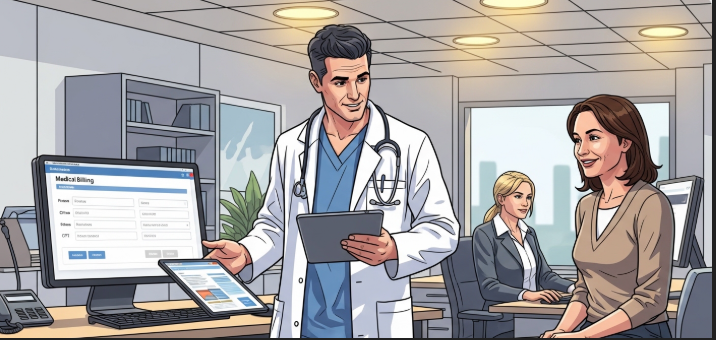

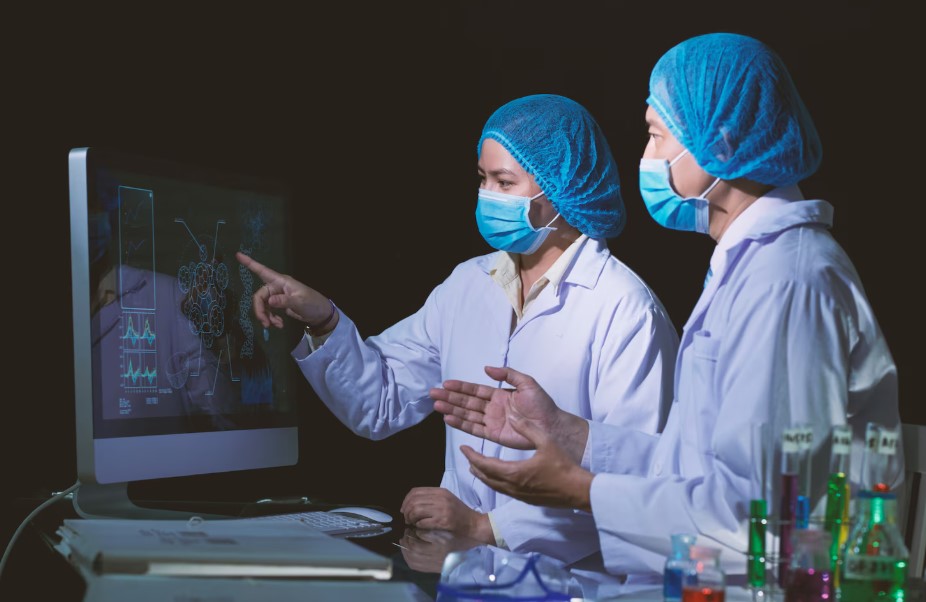
It is the future, the year 2026, and you have entered a hospital; everything about your medical stuff has been processed well before the doctor has stepped in. An intelligent helper takes you to a scanner with the help of a robot, and AI analyzes your data within a second. Though, the benign happens as bioinformatics leaks the secrets of your genes as biotech weapons create a tailor-made treatment that best suits your current needs. This is not science fiction anymore. It represents the fresh beat of contemporary health systems.
Bioinformatics and biotechnology have now become two faces of the same change. Scientists in bioinformatics capture and process vast quantities of biological information genome sequences and protein structures, health records or laboratory data.
Biotechnology reacts upon them and transforms them into products vaccines, diagnostic tests, gene therapies, smart drugs and engineered tissues.
AI, automation and robotics are at the core of this union in 2026. Hospitals have become data driven ecosystems as opposed to institutions which respond to things.
The Story Behind the Technology
Consider a child born with a genetic condition that is rare. Uncertainty and years of trial and error treatment were the order of the day in the past. Tomorrow, a drop of blood can be sequenced and interpreted using bioinformatics systems that are run on AI. The software then compares the findings with world databases and highlights the mutation, forecasts how the disease will progress and leads the doctors to specialized biotechnology based solutions. In certain situations these treatments may even cure the underlying gene.
This is the silent revolution that is transforming lives.
The intelligence that interprets excessive biological information is called AI.
It can:
Suggest the available treatment options optimally automatically.
Such processes are fast, repeatable and accurate through automation. Examples of the laboratory work that has been done with ultra precision by robots include the handling of samples, the preparation of sequencing plates and conducting regular tests. This makes human error minimal and offers scientists the opportunity to do the work of discovery and interpretation rather than doing repetitive work. Indeed, there are many reasons why biotechnologists should embrace AI and robotics to stay at the forefront of these medical breakthroughs.
Robotic systems are also helpful in the daily clinical care process because it:
It is with the power of AI and robotics that there will be a continuous learning loop that will receive the data, refine accuracy, and reinforce the health system.
Biotechnology provides the solution after the problem has been identified with the help of data. Almost all care stages in 2026 are supported by biotechnology:
These improvements do not just cure disease.They tend to avert it much earlier than the symptoms.
There is a shift in health systems towards preventive approach rather than treatment. The benefits are powerful:
Hospitals are transforming to precision medicine centers instead of mere treatment centers.
To ensure that health systems in this new era succeed, a number of necessities need to be put in place.
Leadership should be responsible in order to maintain the trust of the people.
A patient comes to an intelligent clinic. They are checked in by a service robot and real time health data is uploaded by wearable sensors. This information is then compared to the AI system with genomic and clinical history. Bioinformatics tools warn the care group about the possibility of danger before the symptoms occur. Biotechnology can offer a preventive therapy in that specific person. The virtual health assistant directs the patient to go home the same day.
It is proactive healthcare rather than reactive healthcare.
The convergence of bioinformatics, biotechnology, AI, and robotics is fundamentally reimagining healthcare. The year 2026 marks a pivotal shift where prevention eclipses treatment and precision replaces guesswork. While challenges like privacy concerns and equitable access remain, the potential to save lives and reduce suffering makes this transformation essential. The future of healthcare is already here, the question is how quickly we can scale these innovations responsibly. For those seeking to understand how AI is reshaping medicine, continuous learning and ethical implementation will define success in this new era of personalized, proactive care.


Sign up for my newsletter to see new photos, tips, and blog posts. Do not worry, we will never spam you.
Health Engine Journal is a modern health-focused blog dedicated to delivering clear, reliable, and well-researched information. Our goal is to educate, inspire, and support individuals, professionals, and learners in understanding the evolving world of healthcare. We simplify complex medical and wellness topics into practical knowledge you can trust.