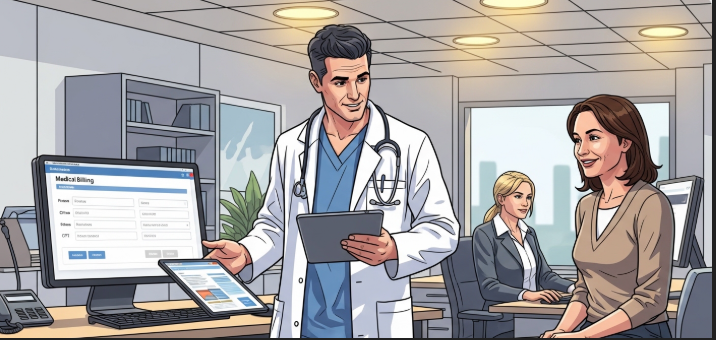


Healthcare data is among the most sensitive information we share today. Patient records contain personal details that require the highest level of protection. Electronic Health Record software has transformed how we store and manage patient data.
Medical facilities now handle millions of patient records every single day. Each record contains vital information about diagnoses, treatments, and personal health history. Protecting this information is not just important but legally required as well.
Data breaches in healthcare can have devastating consequences for patients and providers. Stolen medical records can lead to identity theft and insurance fraud cases. The financial impact on healthcare organizations can reach millions of dollars annually.
EHR systems offer advanced security features for patient data protection. These digital solutions protect patient information while ensuring easy access for providers. Understanding how EHR software maintains security helps healthcare organizations make informed choices.
Electronic Health Record software is a digital version of patient medical charts. It stores comprehensive patient information in a secure and organized digital format. Healthcare providers can access this information instantly from any authorized device.
EHR systems contain patient demographics, medical history, medications, and laboratory test results. They also include immunization records, radiology images, and complete billing information. All this data stays organized in one centralized and secure location.
Modern EHR software connects different departments within a healthcare facility seamlessly. Doctors, nurses, and administrative staff can share information quickly and efficiently. This connectivity improves patient care while maintaining strict security standards throughout.
Every secure EHR system includes multiple layers of protection for patient data. These layers work together to prevent unauthorized access to sensitive medical information. The security framework begins at the infrastructure level and extends to users.
Data encryption forms the foundation of all modern EHR security measures today. Strong authentication protocols verify the identity of every single system user carefully. Access controls ensure that staff members only see information relevant to their roles.
Audit trails record every action taken within the EHR system by users. Automated monitoring detects unusual activity and potential security threats immediately and effectively. Regular security updates protect against newly discovered vulnerabilities and emerging attack methods.
Cloud-based EHR systems store data on remote servers managed by vendors. These systems offer professional security management and automatic updates regularly. Healthcare organizations benefit from enterprise-level security without maintaining their own infrastructure.
On-premises EHR systems keep all patient data within the healthcare facility. Organizations maintain complete control over their security measures and protection protocols carefully. However, they must invest significantly in security expertise and infrastructure themselves.
Both options can meet security and compliance requirements when properly configured. Cloud systems often provide better disaster recovery and backup capabilities for organizations. On-premises solutions may offer more customization options for specific security needs.
The Health Insurance Portability and Accountability Act was signed into law in 1996. HIPAA requires healthcare organizations to protect all electronic patient health information carefully. The Security Rule was published in 2003 and became effective in 2005.
Administrative safeguards include security management processes and comprehensive workforce training programs. Physical safeguards protect the actual computer systems and control building access carefully. Technical safeguards control access to electronic patient health information through various methods.
EHR software must meet all HIPAA security requirements before deployment in facilities. Vendors design their systems with these requirements built into every single feature. Regular compliance audits ensure that security measures remain effective over an extended time.
The Privacy Rule establishes national standards for protecting patient health information. It gives patients important rights over their health information and medical records. Healthcare providers must obtain patient consent before sharing their information with others.
EHR systems include features that support HIPAA Privacy Rule compliance automatically and efficiently. They track consent forms and manage patient authorization for all information sharing. Access logs show exactly who viewed patient records and at what time.
Patients have the right to request copies of their complete medical records. EHR software makes it easier to fulfill these requests quickly and accurately. The system can generate reports while maintaining detailed audit trails automatically.
Modern EHR systems include built-in compliance features from the very start. These features automate many aspects of HIPAA compliance for healthcare organizations effectively. Security settings can be configured to meet specific compliance requirements for facilities.
User authentication requires strong passwords and regular password changes to be enforced automatically from users. The system can enforce minimum password complexity requirements for all system users. Automatic logoff features prevent unauthorized access to unattended workstations in healthcare facilities.
EHR software generates compliance reports that demonstrate adherence to HIPAA rules clearly. These reports help during audits and compliance reviews conducted by regulatory agencies. Documentation of security measures becomes much simpler with automated reporting features.
HIPAA requires Business Associate Agreements between healthcare providers and EHR software vendors. These agreements define exactly how vendors will protect patient health information properly. They establish liability and responsibilities for data security very clearly for the parties.
EHR vendors must implement the same security measures as healthcare providers do. They become legally responsible for protecting all the data they handle daily. Regular security assessments verify that vendors maintain their compliance obligations consistently over time.
Healthcare organizations should review vendor security practices before signing any legal agreements. They should verify vendor certifications and compliance history thoroughly and carefully beforehand. Strong vendor partnerships help ensure ongoing security and compliance success for organizations.
End-to-end encryption protects data throughout its entire journey through systems. Information stays encrypted from the moment it enters the system initially. It remains protected until an authorized user decrypts it for proper viewing.
This encryption method ensures that even system administrators cannot view protected patient data. Only users with proper authorization keys can access the information they need. Intercepted data appears as meaningless code to any unauthorized parties attempting access.
EHR systems use end-to-end encryption for all sensitive communications between parties. Patient portals rely on this encryption to protect information exchanges with providers. Medical records transmitted between facilities remain secure during the entire transfer process.
Advanced Encryption Standard 256-bit represents the gold standard in data encryption. The US government uses AES 256 to protect classified information from threats. This encryption method is virtually impossible to break with current available technology.
AES 256 uses complex mathematical algorithms to scramble data completely and thoroughly. It would take billions of years to crack this encryption with computers. Healthcare data protected with AES 256 remains secure against all modern threats.
Modern EHR systems implement AES 256 encryption for all stored patient data. This includes patient records, billing information, and administrative data stored in systems. The encryption happens automatically without requiring any user intervention at all.
Encryption at rest protects data stored on servers and hard drives permanently. This prevents unauthorized access if physical storage devices are stolen from facilities. All stored patient records remain encrypted until they are properly accessed.
Encryption in transit protects data moving between different system components in networks. This includes information traveling across networks and the internet between locations. It prevents interception during transmission between servers and user devices effectively.
EHR systems use both types of encryption to provide complete data protection. Data remains secure whether stored in databases or transmitted to authorized users. This dual approach eliminates vulnerabilities in the complete data lifecycle process.
Secure Sockets Layer and Transport Layer Security certificates authenticate a website’s identity clearly. These certificates create encrypted connections between users and EHR systems for protection. They prevent man-in-the-middle attacks and data interception effectively.
Users can verify SSL TLS protection by checking for the padlock icon. The web address begins with HTTPS rather than HTTP in browsers. These visual indicators confirm that the connection is secure for users.
EHR vendors must maintain valid SSL TLS certificates at all times consistently. Certificate expiration can leave systems vulnerable to serious security breaches and attacks. Automated certificate renewal ensures continuous protection for all connections to systems.
Role-based access Control assigns permissions based on specific job responsibilities carefully. Doctors access different information than the billing staff or nurses do in facilities. Each user sees only what they actually need for their work.
RBAC simplifies permission management across large healthcare organizations significantly and effectively. Administrators create roles once and then assign users to appropriate roles. This reduces errors and ensures consistent security policy enforcement across facilities.
When employees change positions, their access rights update automatically in the system. The system revokes old permissions and grants new ones immediately upon change. This prevents unauthorized access from former employees or recently transferred staff members.
Multi-factor authentication requires two or more verification methods for successful login. Users must provide something they know and something they have always had. This dramatically reduces the risk of unauthorized access attempts by hackers.
Common MFA methods include passwords combined with phone verification codes sent securely. Biometric factors like fingerprints add another strong layer of security protection. Hardware tokens provide physical proof of identity for sensitive access to systems.
EHR systems should require MFA for all remote access attempts by users. High-privilege accounts need MFA even for on-site access to systems. Regular MFA usage reviews ensure that security measures remain effective over time.
Biometric authentication uses unique physical characteristics to verify user identity accurately. Fingerprints, facial recognition, and iris scans provide strong authentication methods for users. These characteristics cannot be stolen or shared as passwords can be.
Modern EHR systems integrate biometric readers for quick and secure system access. Healthcare workers can log in within seconds using their fingerprints easily. This speed improves workflow while maintaining the highest security standards possible.
Biometric data itself requires careful protection and secure storage methods in systems. The system stores mathematical representations rather than actual biometric images for privacy. This protects user privacy while enabling secure authentication capabilities for all users.
Proper permission management follows the principle of least privilege always in systems. Users receive only the minimum access needed for their specific work. This limits potential damage from compromised accounts or insider threats significantly.
Permission reviews should occur regularly to ensure they remain appropriate for users. Terminated employees must have access revoked immediately upon departure from the organization. Temporary access for consultants or students requires careful monitoring by administrators.
EHR systems provide granular control over what users can view and modify. Some staff may view records but cannot edit or delete them. Others may access specific modules but not the entire system database.
Audit trails create permanent records of all system activities automatically for review. They capture who accessed what information and when it happened in systems. These logs cannot be altered or deleted by regular system users.
Every login attempt, record view, and data modification gets recorded permanently in logs. The system timestamps each action and links it to specific users clearly. This creates accountability and enables investigation of suspicious activities when needed.
Audit trails help healthcare organizations demonstrate compliance with regulations effectively to authorities. They provide evidence during security audits and investigations of breaches by regulators. Detailed logs make it possible to reconstruct past events accurately for review.
Modern EHR systems monitor user activities as they happen continuously throughout operations. Unusual patterns trigger immediate alerts to security administrators for review. This real-time monitoring helps prevent data breaches before they occur.
The system can detect when users access records outside their departmental areas. It notices excessive record viewing or access at unusual times of day. These alerts enable quick investigation and response to potential threats immediately.
Activity tracking also helps identify system performance issues and bottlenecks in operations. Administrators can see which features users access most frequently during work. This information guides system optimization and training program development for staff.
EHR systems generate comprehensive compliance reports automatically on predetermined schedules for review. These reports show access patterns, security incidents, and system changes clearly. They demonstrate adherence to HIPAA and other regulatory requirements clearly to auditors.
Compliance reports can be customized to meet specific organizational needs and preferences. They include metrics on password changes, failed login attempts, and access violations. Visual dashboards make it easy to identify trends and issues quickly.
Regular compliance reporting helps organizations identify security weaknesses before problems occur significantly. Proactive monitoring reduces the risk of violations and penalties significantly for organizations. Documentation proves due diligence during regulatory audits and reviews by authorities.
When security incidents occur, forensic analysis helps to understand what exactly happened. EHR audit trails provide detailed information needed for thorough investigations by teams. Security teams can trace unauthorized access back to its source effectively.
Forensic tools within EHR systems can reconstruct user sessions completely for review. They show exactly what information was viewed or modified during incidents clearly. This evidence is crucial for legal proceedings and disciplinary actions against violators.
Advanced forensic features help identify whether breaches were accidental or intentional acts. They reveal if attackers gained access through compromised credentials or other methods. This information guides response efforts and prevents future similar incidents from occurring.
Automated backups protect against data loss from hardware failures or natural disasters. EHR systems create copies of all data at regular, predetermined intervals. These backups happen automatically without requiring manual intervention from staff members.
Backup frequency depends on how often data changes within the organization daily. Some facilities back up data every hour, while others do daily backups. Critical systems may use continuous backup to minimize potential data loss.
Backup data is stored in multiple locations for added protection against loss. Geographic separation protects against local disasters affecting the primary facility directly. Encrypted backups ensure that stored copies remain secure from unauthorized access attempts.
Disaster recovery plans outline steps to restore EHR systems after major disruptions. These plans include procedures for hardware failures, natural disasters, and cyberattacks, too. Regular testing ensures that recovery procedures work when needed most critically.
Recovery plans identify critical systems that must be restored first after incidents. Patient care systems take priority over administrative functions during recovery efforts. Clear priorities help organizations resume operations as quickly as possible afterward.
EHR vendors typically provide disaster recovery support as part of their services. They maintain backup data centers ready to take over if needed immediately. This redundancy ensures that patient care can continue even during emergencies.
Recovery Time Objective defines how quickly systems must be restored after a disruption. Healthcare organizations typically require very short RTOs for critical systems. Patient care cannot wait long for access to medical records at all.
Recovery Point Objective specifies how much data loss is acceptable for organizations. It determines how frequently backups must occur to meet requirements properly. Most healthcare organizations aim for minimal data loss in any scenario.
EHR systems are designed to meet aggressive RTO and RPO targets consistently. Cloud-based systems often provide faster recovery than on premise solutions do. Understanding these metrics helps organizations choose appropriate EHR solutions for their needs.
Redundant systems maintain duplicate copies of critical components automatically for protection. If one component fails, another takes over without service interruption immediately. This redundancy ensures continuous access to patient records for providers.
Failover systems automatically switch to backup resources when problems occur in systems. Users may not even notice when a failover happens during normal operations. This seamless transition maintains productivity and patient care quality throughout incidents.
Geographic redundancy protects against regional disasters affecting single data centers completely. EHR data replicates to multiple locations in real time continuously for protection. Even complete facility loss cannot prevent access to patient information entirely.
EHR systems track patient consent for information sharing and treatment procedures carefully. They store signed consent forms electronically with the medical record automatically. This ensures that consent documentation is always available when needed by staff.
Consent management features alert providers when consent expires or needs renewal soon. They prevent unauthorized information sharing by automatically enforcing consent requirements in systems. Patients can review and modify their consent preferences through secure portals.
Digital consent forms are easier to update than paper versions ever were. Patients can provide or revoke consent remotely through secure portals easily. The system maintains a complete history of all consent changes over time.
Anonymization removes identifying information from medical records for research purposes safely. This allows valuable medical data to be used without compromising privacy rights. De identified data cannot be traced back to specific patients easily.
EHR systems can automatically remove names, addresses, and other identifying details completely. They replace specific dates with age ranges and remove unique identifiers entirely. The resulting data remains useful for research while protecting patient identity.
Strict protocols govern when and how anonymization occurs within healthcare organizations carefully. Only authorized personnel can perform de de-identification of patient records in systems. Audit trails track all anonymization activities for compliance and oversight by regulators.
Patient portals give individuals secure access to their own medical records easily. They can view test results, medication lists, and appointment history online conveniently. This transparency empowers patients to participate actively in their care decisions.
Portal access requires strong authentication to prevent unauthorized access by other people. Patients create unique credentials and may use multi-factor authentication for security. The system logs all portal activities for security monitoring purposes continuously.
Secure messaging features let patients communicate with providers through encrypted channels safely. They can request prescription refills and ask questions about their care easily. All communications remain private and become part of the medical record.
HIPAA requires that users access only the minimum information needed for work. Staff should not browse records out of curiosity or personal interest ever. EHR systems enforce this principle through technical access controls.
Access requests trigger reviews to ensure they meet legitimate work needs clearly. The system can restrict access to specific fields within records as needed. For example, billing staff may not need to view clinical notes.
Regular audits identify users who access more information than their role requires. Unusual access patterns prompt investigation and possible corrective action by administrators. This oversight maintains privacy and prevents inappropriate record viewing by staff.
The HITECH Act was enacted in 2009 as part of economic recovery legislation. It strengthened HIPAA enforcement and increased penalties for violations significantly nationwide. It promoted the adoption of EHR technology through incentive programs for providers, too.
Meaningful use requires that EHR technology improve patient care and outcomes directly. Systems must support electronic prescribing and clinical decision support features effectively. They must enable secure electronic exchange of health information, too.
EHR vendors obtain certification demonstrating that their products meet meaningful use criteria. This certification assures healthcare providers that systems meet federal requirements properly. Certified EHR technology qualifies organizations for government incentive payments and programs.
The General Data Protection Regulation affects healthcare organizations treating European patients directly. GDPR grants patients extensive rights over their personal health information and data. Healthcare providers must comply consistently when serving patients from EU countries.
GDPR requires explicit consent for data processing and storage activities from patients. Patients can request the deletion of their information under certain circumstances legally. Organizations must report data breaches to authorities within 72 hours exactly.
EHR systems serving international patients must include GDPR compliance features properly. These include consent tracking, data portability, and right to deletion capabilities. Multi-region deployment requires understanding various international privacy regulations thoroughly.
The Office of the National Coordinator for Health IT establishes certification standards. These standards ensure EHR systems meet technical capabilities and security requirements properly. ONC certification is required for participation in federal programs and incentives.
Certification testing evaluates system functionality, interoperability, and security measures thoroughly and carefully. Independent testing laboratories verify that systems meet all specified criteria exactly. Certification must be maintained through regular updates and retesting procedures.
Healthcare organizations should verify that their EHR vendor maintains current certification always. Certification status can be checked on the ONC website publicly by anyone. Using certified EHR technology helps ensure compliance with federal requirements consistently.
Individual states may impose additional requirements beyond federal HIPAA regulations, too. Some states have stricter breach notification requirements or privacy protections for patients. Healthcare organizations must comply with both federal and state laws simultaneously.
State regulations may address specific types of information, like mental health records. They might require additional consent for certain types of information sharing, too. EHR systems must accommodate these varying requirements across different states properly.
Multi-state healthcare organizations face complex compliance challenges from varying regulations daily. EHR systems need flexibility to enforce different rules in different locations. Regular legal review ensures that practices meet all applicable requirements consistently.
Healthcare organizations face constant threats from cybercriminals seeking valuable patient data daily. Phishing attacks attempt to trick staff into revealing login credentials to hackers. Ransomware encrypts critical data and demands payment for its release from organizations.
Malware infections can provide attackers with ongoing access to healthcare networks silently and secretly. Insider threats come from employees who abuse their authorized access to systems. Distributed denial of service attacks can make EHR systems unavailable temporarily.
Medical devices connected to networks create additional potential entry points for hackers. Outdated systems without security updates remain vulnerable to known exploits by criminals. Social engineering manipulates people into bypassing security measures without realizing it.
Ransomware attacks have become increasingly common in healthcare facilities nationwide recently. These attacks can shut down entire hospital systems for days or weeks. Protection requires multiple defensive layers working together continuously and effectively.
Regular data backups enable recovery without paying ransom demands to criminals ever. Network segmentation limits how far ransomware can spread through systems if infected. Email filtering blocks many ransomware delivery attempts before they reach users.
Employee training helps staff recognize and report suspicious emails immediately to administrators. Up-to-date antivirus software detects and blocks many ransomware variants automatically. Incident response plans enable quick action when ransomware is detected in systems.
Phishing emails impersonate legitimate organizations to steal login credentials from unsuspecting users. These messages often create urgency to prompt quick action without thinking carefully. They may contain malicious links or attachments that install malware on computers.
Security awareness training teaches staff to recognize phishing attempts effectively and quickly. Employees learn to verify sender identity before clicking links or attachments carefully. Reporting suspicious emails helps security teams identify and block attacks immediately.
Email authentication technologies reduce the number of phishing messages reaching users significantly. Multi-factor authentication protects accounts even if passwords are compromised accidentally. Regular phishing simulations test staff readiness and identify training needs for improvement.
Insider threats come from employees, contractors, or business partners with system access. These threats may be intentional malicious activity or accidental policy violations, too. Detecting insider threats requires carefully monitoring user behavior for unusual patterns.
Background checks help identify potential security risks before granting access to systems. Clear security policies establish expectations for appropriate system usage by all staff. Regular access reviews ensure that permissions remain appropriate over time for users.
User behavior analytics detect when employees access unusual records or data unexpectedly. Prompt investigation of anomalies can prevent data theft or breaches from occurring. Creating a positive security culture reduces intentional insider threat incidents significantly.
Vulnerability assessments identify security weaknesses before attackers exploit them successfully in systems. These assessments should occur regularly on predetermined schedules, always without exception. Both automated scanning and manual testing provide comprehensive coverage for organizations.
Penetration testing simulates real-world attacks to thoroughly and effectively test defensive capabilities. Ethical hackers attempt to breach systems using methods criminals would employ today. Results guide improvements to security controls and incident response procedures for teams.
Discovered vulnerabilities must be prioritized and remediated quickly based on severity levels. Critical vulnerabilities affecting patient data require immediate attention and fixes from teams. Regular assessments lead to continuous improvement in an organization’s security posture over time.
HITRUST Common Security Framework provides comprehensive security and privacy standards specifically for healthcare. This certification demonstrates that EHR systems meet rigorous security requirements properly. Many healthcare organizations require HITRUST certification from their vendors now.
HITRUST certification addresses multiple regulatory requirements in a single unified framework. It incorporates HIPAA, HITECH, and other relevant standards comprehensively. Third-party assessors verify compliance through thorough audits and testing procedures.
Maintaining HITRUST certification requires ongoing compliance monitoring and annual assessments consistently. Organizations must remediate any identified deficiencies promptly to maintain certification status. This continuous oversight ensures that security remains strong over time.
Service Organization Control 2 reports evaluate security controls at service providers thoroughly. These reports assess security, availability, processing integrity, confidentiality, and privacy measures. SOC 2 Type 2 reports verify that controls operate effectively over time.
Independent auditors examine vendor security practices and issue detailed reports to clients. Healthcare organizations review these reports before trusting vendors with patient data. SOC 2 compliance demonstrates a commitment to strong security practices consistently over time.
Annual SOC 2 audits ensure that security controls remain effective continuously without gaps. Vendors must maintain documentation of their security policies and procedures properly. This oversight assures that patient data remains protected properly always.
Cloud EHR providers implement extensive security measures to protect customer data effectively. Physical security controls protect data centers from unauthorized access completely and thoroughly. Environmental controls prevent damage from fire, flood, or power failures, too.
Network security measures include firewalls, intrusion detection, and prevention systems working together. Data segregation ensures that one customer cannot access another’s information at all. Redundant infrastructure provides high availability and disaster recovery capabilities for all.
Cloud providers employ dedicated security teams that monitor threats continuously around the clock, daily. They maintain security certifications demonstrating compliance with industry standards consistently over time. Regular security audits verify that protective measures remain effective always.
Independent security audits provide an accurate assessment of EHR security measures. These audits verify that vendors implement security controls as claimed to customers. Regular audits give healthcare organizations confidence in their vendor partnerships long-term.
Audit reports identify strengths and weaknesses in security implementations clearly for review. They provide recommendations for improving security posture and addressing gaps found. Organizations should review audit results before selecting or renewing vendors carefully.
Continuous monitoring supplements periodic audits to maintain security between assessments effectively. Real-time threat intelligence helps vendors respond to emerging threats quickly. This comprehensive approach ensures ongoing protection for patient health information always.
Selecting the right EHR vendor is crucial for security and compliance success. Organizations should evaluate vendor security practices and certifications thoroughly first. References from existing customers provide insight into real-world experiences with vendors.
Vendor financial stability ensures ongoing support and security updates long-term, reliably. Small vendors may lack resources for robust security programs, unfortunately, sometimes. Larger vendors typically invest more heavily in security infrastructure and expertise.
Contract negotiations should address security requirements and responsibilities explicitly always clearly. Service level agreements define uptime guarantees and support response times specifically. Clear terms protect both parties and establish expectations from the beginning.
Comprehensive security training helps staff understand their role in protecting data properly. Training should clearly cover policies, procedures, and the consequences of security violations. Regular refresher training helps maintain high security awareness over time.
New employee orientation must always include thorough security and privacy training. Staff should understand HIPAA requirements and organizational security policies completely before accessing. Hands-on training with the EHR system reinforces proper usage habits.
Ongoing security awareness campaigns remind staff about current threats regularly throughout the year. Simulated phishing exercises test readiness and identify additional training needs clearly. Recognition programs can reward staff who demonstrate excellent security practices consistently.
Security updates fix vulnerabilities that could be exploited by attackers in systems. Vendors release patches regularly to address newly discovered security issues quickly. Timely installation of updates is critical for maintaining system security always.
Organizations should establish processes for testing and deploying security updates properly. Critical security patches may require immediate installation without delay. Regular updates should be scheduled during maintenance windows to minimize disruption.
Automated patch management systems can streamline the update process significantly for teams. They ensure that all systems receive updates consistently and promptly without gaps. Documentation of patch installation demonstrates due diligence during compliance audits clearly.
A strong security culture makes the protection of patient data everyone’s responsibility equally. Leadership must demonstrate commitment to security through actions and resources. Security considerations should factor into all organizational decisions made daily.
Open communication about security concerns encourages reporting of potential issues immediately. Staff should feel comfortable reporting mistakes without fear of punishment ever. Learning from incidents helps prevent future security problems from occurring again.
Regular security metrics and reporting keep security visible throughout the organization. Celebrating security successes reinforces positive behaviors and attitudes consistently over time. A continuous improvement mindset ensures that security evolves with changing threats.
EHR software uses multiple layers of security to prevent unauthorized access effectively. Strong encryption protects data both in storage and during transmission. Access controls ensure only authorized users can view patient information properly.
Regular security monitoring detects unusual activity that might indicate a breach quickly. Automatic alerts notify security teams of potential threats immediately for response. These combined measures significantly reduce the risk of successful data breaches.
Security compliance costs vary significantly based on organization size and system complexity. Initial implementation may require significant investment in technology and training resources. Ongoing costs include maintenance, updates, monitoring, and compliance audits regularly.
Cloud-based EHR systems often include security compliance in subscription fees already. This can be more cost-effective than building an in-house security infrastructure. The cost of non-compliance, including fines and reputation damage, exceeds compliance investment.
Organizations should conduct comprehensive security audits at least annually as a minimum standard. More frequent audits may be required by specific regulations or contracts. High-risk organizations may benefit from quarterly security assessments instead.
Continuous monitoring supplements periodic audits to maintain security between formal reviews. Penetration testing should occur at least annually or after major changes. Regular vulnerability scanning should happen monthly or even more frequently.
Cloud-based EHR systems make enterprise-level security affordable for small practices. Subscription pricing eliminates high upfront costs for hardware and infrastructure investment. Vendors manage security updates and monitoring, reducing the need for staff.
Small practices should prioritize security despite budget constraints whenever possible. Data breaches can be devastating for small organizations financially and reputationally. Many EHR vendors offer solutions specifically designed for small practice needs.
Organizations must follow breach notification procedures required by HIPAA and state laws. They must investigate the breach scope and notify affected patients promptly. Regulatory authorities must be notified within the required timeframes as well.
Breach response includes containing the incident and preventing further unauthorized access immediately. Forensic analysis determines exactly what information was accessed or stolen. Organizations may face regulatory fines and must offer credit monitoring services.
Electronic Health Record software has revolutionized how we protect patient information today. Advanced security features provide protection that paper records never could offer. Healthcare organizations can now safeguard data while improving access and efficiency.
Implementing secure EHR systems requires commitment from leadership and staff equally. Strong vendor partnerships and ongoing training create foundations for success long-term. Regular monitoring and updates ensure that protection remains effective over time.
The healthcare industry continues to face evolving cybersecurity threats every day. EHR systems must adapt continuously to address new challenges effectively. Investment in security technology and expertise protects patients and organizations alike.
Patient trust depends on healthcare organizations protecting their most sensitive information. Secure EHR systems demonstrate commitment to privacy and compliance requirements clearly. When implemented properly, EHR technology enhances both security and patient care.
Healthcare providers should evaluate their current EHR security measures honestly today. Identifying gaps and addressing them proactively prevents costly breaches and violations. The future of healthcare depends on maintaining the highest security standards.


Sign up for my newsletter to see new photos, tips, and blog posts. Do not worry, we will never spam you.
Health Engine Journal is a modern health-focused blog dedicated to delivering clear, reliable, and well-researched information. Our goal is to educate, inspire, and support individuals, professionals, and learners in understanding the evolving world of healthcare. We simplify complex medical and wellness topics into practical knowledge you can trust.