

Creating accurate claims and ensuring proper reimbursement for gastroenterology services is not just an administrative task that you can ignore. It is an integral step that ensures the financial health and operational efficiency of your practice.
Providers often struggle to navigate the intricacies of colonoscopy coding, leading to denials and uncompensated care. Therefore, we decided to empower you with knowledge! Yes, with the correct understanding of the nuances between techniques, like snare vs. forceps, you can differentiate between similar codes and ensure precision in billing.
This guide is dedicated to discussing an essential colonoscopy procedure code, CPT code 45385. We will cover everything, from explaining its descriptor to real-world scenarios and billing guidelines.
If you are completely new to this system, check out our complete guide to CPT codes to get familiar with the basics.
So, without further ado, let’s get started.
Do you want to bill it accurately, but don’t know where to start? Then, start by thoroughly reviewing the procedural code descriptor. Oftentimes, there is a slight difference in the technique used, specifically how a lesion is removed, that makes all the difference. Choose the wrong code, and you will commit a serious mistake in medical billing.
Enough with the disclaimer! Let’s understand what the CPT code 45385 descriptor involves. It covers a colonoscopy, flexible; with removal of tumor(s), polyp(s), or other lesion(s) by snare technique.
A provider performs this procedure by using a colonoscope, a long, flexible tube with a camera, to visualize the large intestine. The “snare technique” is the critical component here. It involves a wire loop (snare) that is slid through the colonoscope, positioned around the base of the growth, and tightened to remove the lesion, often using a small electrical current (cautery).
This procedure is both diagnostic and therapeutic. The doctor examines the colon, and upon detecting a problem, performs an immediate intervention.
Discussed below are some of the real-world clinical scenarios where CPT code 45385 applies:
Picture a 50-year-old patient with a family history of colon issues who visits for a routine screening colonoscopy. Everything appears normal initially, but during the examination, the physician identifies a polyp in the sigmoid colon.
Instead of scheduling a separate visit, the physician deploys a snare through the scope and removes the polyp immediately. Here, CPT code 45385 applies because the snare technique was utilized for removal. Note: This often changes the nature of the visit from purely “screening” to “diagnostic,” which can impact patient cost-sharing.
Consider a 62-year-old male patient complaining of changes in bowel habits and unexplained rectal bleeding. The physician orders a diagnostic colonoscopy to investigate the source of the symptoms. During the procedure, a lesion is discovered. The provider uses a snare to excise the lesion to send it for pathology. In this situation, CPT code 45385 will be reported for accurate reimbursement.
Imagine a patient returns for a follow-up procedure because previous polyps were too large to remove in a single session, or the patient was previously on anticoagulants that made removal unsafe at the time. The physician now returns to the site and successfully removes the remaining polyps using the snare technique. CPT code 45385 precisely covers this performed procedure.
Important Note: If the provider removes the polyp using hot biopsy forceps or cold biopsy forceps, do not use this code. The technique dictates the code selection.
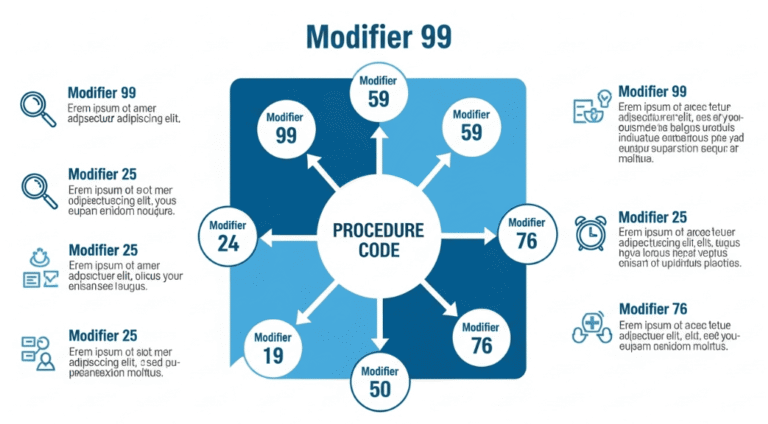
What happens when you encounter a situation where the procedure is interrupted, or multiple distinct procedures are performed? Will the payer pay you for everything? The typical scenario may result in a claim denial if modifiers are not used correctly.
So, how may one avoid falling victim to such denials? Here are the essential modifiers to know:
You can learn more about proper modifier usage through resources provided by the Centers for Medicare & Medicaid Services.
The following are the essential reimbursement and billing requirements for snare technique colonoscopy:
You can never unlock a locked door with the wrong key. The same applies to reimbursement. The payer will never compensate for care services if the procedure is deemed medically unnecessary. Thus, the top requirement is to justify the medical necessity. You must ensure your claim includes the correct diagnosis codes, typically ICD-10 codes related to polyps, benign neoplasms, or abnormal findings, that logically support the procedure.
Comprehensive and accurate documentation is another integral requirement when billing CPT code 45385. Therefore, your documentation must include the following:
Do not bill CPT 45385 with other codes that are considered mutually exclusive or bundled by the payer for the same lesion. Understanding your payer’s bundling rules can save you from significant revenue loss.
We have covered a lot of ground in this guide. So, let’s quickly summarize all key takeaways to reiterate the critical details related to CPT code 45385.
With all this information, you are now better equipped to differentiate between colonoscopy codes and secure the reimbursement your practice deserves.



Sign up for my newsletter to see new photos, tips, and blog posts. Do not worry, we will never spam you.
Health Engine Journal is a modern health-focused blog dedicated to delivering clear, reliable, and well-researched information. Our goal is to educate, inspire, and support individuals, professionals, and learners in understanding the evolving world of healthcare. We simplify complex medical and wellness topics into practical knowledge you can trust.