

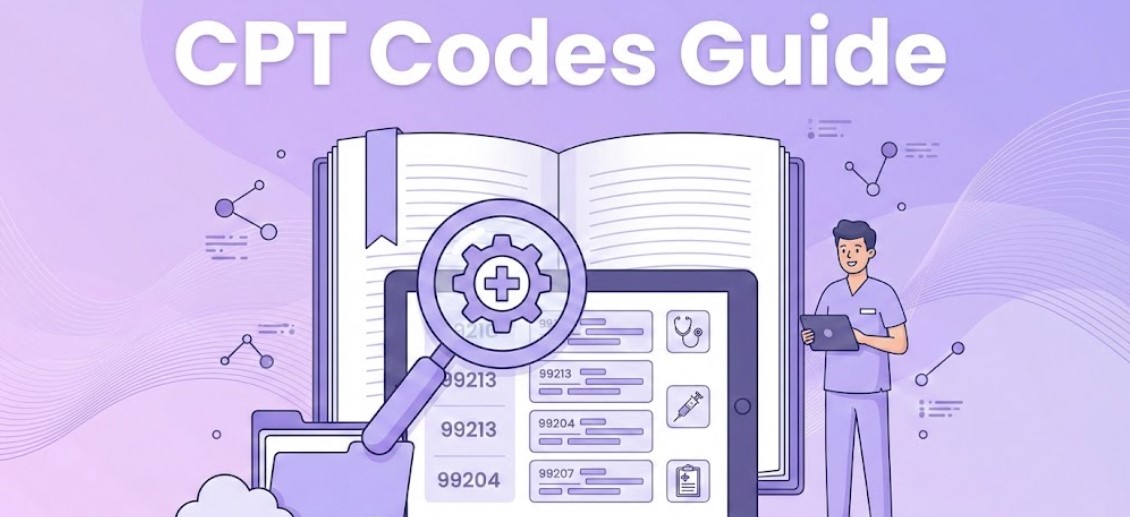
Current Procedural Terminology (CPT) codes are standardized numeric or alphanumeric codes used to describe medical, surgical, and diagnostic services provided by healthcare professionals.
Developed and maintained by the American Medical Association (AMA), these codes create a uniform language that enables accurate communication between healthcare providers, patients, and insurance companies regarding the services rendered during medical care.
CPT codes serve as the foundation for medical billing and reimbursement in the United States healthcare system. Each code corresponds to a specific medical procedure, service, or test, ranging from routine office visits to complex surgical procedures.
The coding system ensures consistency across the healthcare industry, facilitating proper documentation, billing accuracy, and statistical analysis of medical services performed by qualified healthcare professionals.
CPT codes are organized into three distinct categories, each serving a specific purpose in medical documentation and billing:
Category I codes represent the most commonly used CPT codes and consist of five-digit numeric codes. These codes describe procedures and services that are widely performed by healthcare providers across the United States and have been approved by the FDA. Category I codes are divided into six main sections: Evaluation and Management, Anesthesia, Surgery, Radiology, Pathology and Laboratory, and Medicine. These codes are updated annually by the AMA to reflect advances in medical technology and changes in clinical practice.
Category II codes are optional supplemental tracking codes used primarily for performance measurement and quality improvement initiatives. These five-digit alphanumeric codes end with the letter “F” and are designed to facilitate data collection about quality of care. Healthcare providers use Category II codes to document services that contribute to positive health outcomes, such as patient education, follow-up care, and preventive services. Unlike Category I codes, Category II codes are not used for billing purposes and do not affect reimbursement.
Category III codes are temporary codes assigned to emerging technologies, services, and procedures that are still in the developmental or trial phase. These codes consist of four digits followed by the letter “T” and allow healthcare providers to track new procedures before they receive permanent Category I status. Category III codes are particularly important for clinical research and help facilitate data collection on innovative treatments. The AMA reviews these codes regularly, and they may be promoted to Category I status, retired, or continued as Category III codes based on their clinical acceptance and usage.
CPT codes play a critical role in the modern healthcare system, serving multiple essential functions that impact providers, patients, and payers alike.
Standardized Communication: CPT codes create a universal language that eliminates ambiguity in medical billing and documentation. When a healthcare provider submits a claim using a specific CPT code, insurance companies, government payers, and other stakeholders immediately understand exactly which service was performed, regardless of geographic location or healthcare setting.
Accurate Reimbursement: The primary function of CPT codes is to ensure healthcare providers receive appropriate payment for their services. Each code is associated with specific reimbursement rates established by Medicare, Medicaid, and private insurance companies. Accurate coding directly affects a medical practice’s revenue cycle and financial health.
Legal Compliance: Proper CPT coding is not merely a best practice but a legal requirement under healthcare regulations. Incorrect coding can result in claim denials, audits, and potentially serious legal consequences, including allegations of fraud or abuse under the False Claims Act. Healthcare providers must maintain compliance with federal and state regulations governing medical billing.
Data Collection and Analysis: CPT codes enable comprehensive tracking of healthcare trends, disease prevalence, treatment outcomes, and resource utilization. Public health officials, researchers, and policymakers rely on data derived from CPT codes to make informed decisions about healthcare policy, resource allocation, and population health management.
Quality Improvement: Through the use of Category II codes and proper documentation, CPT codes support quality measurement initiatives and help healthcare organizations identify areas for improvement in patient care delivery and clinical outcomes.
Maintaining accuracy in CPT coding requires ongoing attention, education, and implementation of systematic processes. Healthcare providers and coding professionals should adopt the following best practices:
The AMA updates CPT codes annually, with changes taking effect on January 1st of each year. Codes may be added, deleted, or revised to reflect advances in medical technology and changes in clinical practice. Subscribe to official AMA CPT updates, attend continuing education courses, and implement a system for reviewing and integrating code changes into your practice management software before each new year begins.
Always select the most specific CPT code that accurately describes the service provided. General or unspecified codes should only be used when a more specific code does not exist. Review the complete code description, including any parenthetical notes or instructions, to ensure you’re selecting the appropriate code. Using overly broad codes may result in underpayment, while using codes that are too specific for the service performed can lead to claim denials or compliance issues.
Comprehensive medical documentation is the foundation of accurate CPT coding. The medical record must support the codes submitted on the claim. Document the medical necessity for procedures, the time spent on services (when time-based codes are used), the complexity of medical decision-making, and all relevant clinical details. Remember that if a service isn’t documented, it effectively wasn’t performed from a coding and reimbursement perspective.
Certain CPT codes cannot be billed together due to bundling rules established by the National Correct Coding Initiative (NCCI). Familiarize yourself with these edits to avoid claim denials. Use modifiers appropriately to indicate when services have been altered or when specific circumstances apply. Common modifiers include -25 (significant, separately identifiable E/M service), -59 (distinct procedural service), and -51 (multiple procedures).
Conduct periodic internal audits of coded claims to identify patterns of errors, ensure compliance, and maintain coding accuracy. These audits help detect issues before they become systemic problems and can prevent costly external audits or investigations. Review a sample of claims monthly or quarterly, focusing on high-volume codes, complex procedures, and areas where errors have previously occurred.
Ensure that coding staff maintain current certifications such as Certified Professional Coder (CPC) or Certified Coding Specialist (CCS). Provide ongoing education opportunities, including workshops, webinars, and conferences. Consider implementing a mentoring program where experienced coders support newer staff members.
Leverage electronic health record (EHR) systems with built-in coding assistance, coding software that includes edit checks, and automated claim scrubbing tools. These technologies can help identify potential errors before claims are submitted, reducing denial rates and improving revenue cycle efficiency.
The Centers for Medicare & Medicaid Services (CMS) published the annual update to the list of CPT/HCPCS codes effective January 1, 2026, on December 1, 2025. Healthcare providers and billing professionals must review these changes carefully to ensure compliance and accurate billing practices for the upcoming year.
The 2026 update includes additions of new codes reflecting emerging medical technologies and procedures, deletions of outdated codes that are no longer clinically relevant, and corrections to existing code descriptions for improved clarity. The complete list of codes and detailed description of revisions are available in the official CMS publication.
Comment Period: To facilitate stakeholder input, CMS opened a public comment period for the 2026 code list. Comments can be submitted through www.regulations.gov by entering docket number “CMS-2025-0932” in the search field. To be considered, all comments must be received on or before December 31, 2025. This participatory process allows healthcare providers, professional associations, and other interested parties to provide feedback on proposed changes before they take effect.
Healthcare organizations should update their practice management systems, coding software, and billing protocols to reflect the 2026 code changes before the January 1st effective date. Training sessions for clinical and administrative staff should be scheduled to review the most significant updates affecting your specialty or practice area.
Understanding frequently used CPT codes helps healthcare providers and billing professionals work more efficiently and reduces coding errors. Here are ten of the most commonly utilized codes across various medical specialties:
This code represents one of the most frequently billed services in outpatient care, used for established patient office visits of moderate complexity. The visit typically involves straightforward medical decision-making and addresses one or more established medical conditions that are stable or improving.
Used for established patient visits requiring moderate level medical decision-making, this code applies when patients present with multiple chronic conditions or a new problem with uncertain prognosis. These visits typically require more extensive evaluation and management than code 99213.
This code represents the highest level of established patient office visits, involving high complexity medical decision-making for patients with severe, unstable conditions or multiple complex chronic diseases. Documentation must clearly support the medical necessity for this level of service.
Used for annual preventive medicine examinations for established patients between ages 40 and 64, this code covers comprehensive preventive services including age-appropriate screenings, counseling, and anticipatory guidance. These visits focus on health maintenance rather than treatment of acute or chronic conditions.
This preventive medicine code applies to established patients aged 65 and older receiving annual wellness examinations. The service includes assessment of physical and cognitive function, review of medications, and discussion of preventive care measures appropriate for senior patients.
One of the most commonly used codes in physical therapy and rehabilitation, this code covers therapeutic exercises to develop strength, endurance, range of motion, and flexibility. Each unit represents 15 minutes of one-on-one therapeutic exercise with a qualified healthcare professional.
This code describes the collection of a venous blood sample by venipuncture, one of the most frequently performed procedures in healthcare settings. The code covers the technical skill of accessing the vein and collecting the specimen but does not include laboratory analysis.
Used for reporting the first immunization administration during a patient encounter, this code covers the healthcare professional’s service of administering a vaccine. Additional vaccine administrations during the same visit are reported with add-on codes.
This code is used for presumptive drug testing, often performed in primary care, pain management, and addiction medicine settings. The test provides initial screening results and may be followed by more specific confirmatory testing if necessary.
This code represents a colonoscopy with removal of tumor, polyp, or other lesion by snare technique, one of the most common gastrointestinal procedures. Colonoscopy screening and therapeutic procedures are essential preventive services covered by most insurance plans.
Errors in CPT coding can have far-reaching consequences that extend beyond simple billing mistakes, affecting healthcare providers, patients, and the entire healthcare system.
Coding errors directly impact a healthcare organization’s revenue cycle. Undercoding results in lost revenue because providers fail to receive full reimbursement for services rendered. Conversely, upcoding, billing for a higher level of service than was actually provided, can lead to overpayment recovery demands, substantial financial penalties, and potential fraud investigations.
Incorrect CPT codes are among the leading causes of claim denials from insurance companies. Each denied claim requires staff time to investigate, correct, and resubmit, creating administrative burden and delaying payment. Repeated denials damage the relationship between providers and payers and can result in cash flow problems that threaten the financial stability of medical practices.
The federal government takes medical billing fraud seriously, and incorrect CPT coding can trigger investigations under the False Claims Act. Whether errors are intentional or inadvertent, healthcare providers remain liable for incorrect billing. Compliance violations can result in exclusion from federal healthcare programs, substantial monetary penalties, criminal prosecution in severe cases, and permanent damage to professional reputation.
Coding errors affect patients through incorrect cost-sharing calculations, improper application of deductibles and coinsurance, and potentially affecting their insurance coverage limits. Patients may receive unexpected bills for services they believed were covered, eroding trust in their healthcare providers. Additionally, errors in diagnostic coding (ICD-10 codes) that accompany CPT codes can affect patients’ medical records and future insurance eligibility.
Healthcare policy decisions, research studies, and public health initiatives rely on accurate coding data. Widespread coding errors contaminate healthcare databases, leading to flawed conclusions about disease prevalence, treatment effectiveness, and resource utilization. This undermines evidence-based medicine and can result in misguided healthcare policies.
Healthcare organizations with high error rates face increased likelihood of external audits from government agencies, Medicare Administrative Contractors (MACs), and private insurers. Audits consume significant staff time and resources, disrupt normal operations, and may uncover additional compliance issues requiring corrective action. The costs associated with responding to audits and implementing corrective action plans can be substantial.
Coding violations and billing errors can damage a healthcare provider’s professional reputation within the medical community and among patients. News of fraud investigations or significant compliance failures spreads quickly, potentially resulting in patient attrition, difficulty recruiting quality staff, and strained relationships with referring physicians and hospital systems.
CPT codes are the essential foundation of medical billing and communication. They are not just for payment; they ensure legal compliance and support quality patient care.
Because medicine constantly changes, thousands of codes are updated every year, meaning healthcare teams must commit to ongoing training.
To succeed, providers need accurate clinical records and robust coding processes. Investing in these practices leads to better revenue, lower legal risk, and smoother operations.


Sign up for my newsletter to see new photos, tips, and blog posts. Do not worry, we will never spam you.
Health Engine Journal is a modern health-focused blog dedicated to delivering clear, reliable, and well-researched information. Our goal is to educate, inspire, and support individuals, professionals, and learners in understanding the evolving world of healthcare. We simplify complex medical and wellness topics into practical knowledge you can trust.