

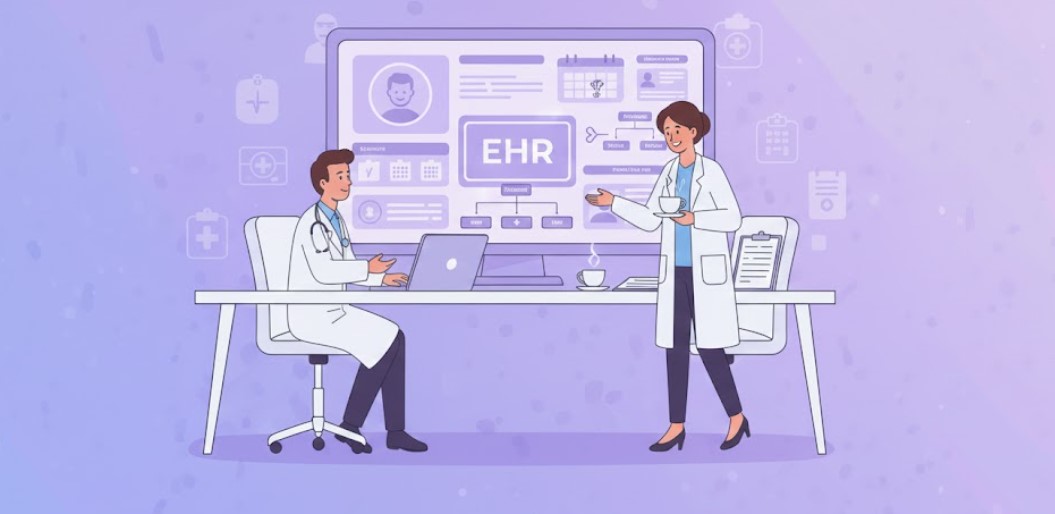
Electronic Health Records have changed how doctors treat patients today. These digital systems help hospitals work faster and provide better care. Nearly 96% of non-federal acute care hospitals use certified EHR systems. The technology makes patient information easy to access and share.
Electronic Health Records are digital versions of patient medical charts. They contain all medical information in one secure digital place. Doctors can access a complete patient history with just a few clicks. The system stores test results and treatment plans in electronic format. This makes healthcare delivery more organized and efficient for everyone.
Understanding what is EHR software is fundamental to appreciating how these systems transform modern healthcare delivery and patient outcomes.
Good EHR systems include several important features for daily healthcare use. Patient demographics and complete medical history form the basic foundation. Laboratory results and imaging reports connect directly to the main system. Medication lists and allergy information stay updated in real time. Billing and insurance information also integrate seamlessly with clinical data records.
Paper records take up physical space and get lost very easily. Electronic records are always available whenever doctors need them most. Multiple providers can view the same patient record at once. Updates happen instantly across the entire connected healthcare system network. This reduces medical errors and improves patient safety significantly every day.
EHR technology has revolutionized how healthcare facilities operate, creating more streamlined and efficient processes that benefit both providers and patients. These digital systems eliminate many traditional bottlenecks in clinical workflows.
EHR systems enable busy medical staff to complete routine tasks much faster. Appointment scheduling becomes fully automated and more accurate over time. Test orders are sent directly to laboratories without requiring any paper forms. Results come back to doctors through the same connected system. This approach saves hours of valuable work every single day.
Doctors spend less time on paperwork with properly implemented EHR systems. Voice recognition technology helps create notes while seeing patients directly. Templates speed up documentation for common medical conditions and complaints. Automatic coding helps with billing and insurance claims processing, too. This gives doctors significantly more time to focus on patient care.
EHR systems provide helpful alerts during important patient care decisions. Drug interaction warnings appear when prescribing new medications simultaneously. Evidence-based treatment suggestions guide doctors toward proven best practices daily. Risk calculators help identify patients who need preventive care interventions. These digital tools significantly improve the quality of medical decisions.
Digital health records have become essential tools in preventing medical errors and enhancing patient safety across all healthcare settings. The numerous benefits of electronic health record software for modern clinics extend far beyond simple record-keeping.
Electronic prescribing reduces mistakes that happen with handwritten prescription orders. The system automatically checks for dangerous drug combinations every single time. Dosage calculations help prevent errors in pediatric and elderly patient care. Allergy alerts stop doctors from prescribing harmful medications to patients quickly. Research shows EHR systems help reduce medication errors when properly implemented.
EHR systems constantly monitor patient data and flag dangerous situations. Abnormal lab results trigger immediate notifications to entire care teams. Critical values get escalated to senior doctors automatically and instantly. Drug allergy warnings appear before any prescription gets processed completely. These timely alerts help catch problems before they harm any patients.
Digital records make it easier to measure and track care quality. Healthcare teams can review treatment outcomes across large patient populations. Quality metrics help identify areas that need improvement very quickly. Patient safety incidents are documented and analyzed systematically and thoroughly now. This continuous monitoring leads to better protocols and safer care delivery.
Modern EHR systems provide healthcare professionals with comprehensive tools that enhance their ability to deliver excellent patient care while maintaining work-life balance. These technologies support every member of the care team in their daily responsibilities.
EHR systems help doctors see more patients without rushing their care. Quick access to medical histories speeds up each patient visit significantly. Templates and shortcuts reduce typing time during documentation sessions and charting. Mobile access lets doctors review records from anywhere they need. This flexibility improves work-life balance for busy physicians practicing today.
Nurses use EHR systems to coordinate care across entire nursing shifts. Medication administration records prevent double-dosing or missed doses of medications completely. Care plans help nurses follow treatment protocols consistently every single day. Handoff reports transfer smoothly between nursing shifts electronically and efficiently now. This improves communication and reduces errors during critical shift changes daily.
Modern healthcare requires coordination between many different specialists working together daily. EHR systems let entire care teams view the same patient information. Notes and updates appear instantly for all team members involved. Care plans can be developed collaboratively through the connected system. This team-based approach leads to better outcomes for all patients.
Patient engagement has become a cornerstone of effective healthcare delivery, and EHR systems play a vital role in empowering patients to take active roles in their health management. These digital platforms create new opportunities for meaningful patient-provider interaction.
Patients can view their own health records through secure online portals. Lab results become available as soon as doctors review and release them. This transparency builds trust between patients and healthcare providers working together. Patients feel more involved in their own healthcare decisions and planning. Access to information helps people take better care of their health.
EHR portals allow patients to ask questions without making phone calls. Doctors can respond to simple questions at convenient times for them. This reduces unnecessary office visits for minor concerns and questions significantly. Secure messaging protects patient privacy better than regular email communication does. The system keeps a permanent record of all communication exchanges automatically.
Patients can book appointments online at any time of the day. Prescription refill requests get processed faster through the secure patient portal. This convenience reduces no-shows and improves medication adherence rates among patients. Patients appreciate the flexibility and control over their healthcare scheduling needs. Healthcare staff spend less time on phone scheduling and administrative tasks.
Clinical documentation represents one of the most time-consuming aspects of healthcare delivery, but modern EHR systems have transformed this process dramatically. Advanced technologies now support providers in creating comprehensive, accurate documentation efficiently.
Speech recognition technology lets doctors dictate notes instead of typing everything. Natural language processing helps organize information into proper clinical documentation formats. This technology speeds up documentation by several minutes per patient visit. Doctors can maintain eye contact while documenting patient visits and concerns. The quality of clinical notes improves significantly with these advanced tools.
Templates help standardize documentation across the entire healthcare organization and facility. Drop-down menus and checkboxes speed up routine documentation tasks significantly. Structured data makes it easier to search patient records later on. Quality reporting becomes simpler with organized information entry methods and systems. This consistency improves communication between all care providers involved in treatment.
Clinical documentation connects directly to billing systems automatically in real time now. Proper coding happens based on what doctors document clearly and completely. This reduces claim denials and speeds up payment processing for services. Revenue cycle management becomes more efficient with integrated digital systems available. Healthcare organizations get paid faster for the services they provide daily.
Data analytics capabilities within EHR systems enable healthcare organizations to move beyond individual patient care toward comprehensive population health management. These analytical tools transform raw data into actionable insights that improve care delivery.
EHR systems help identify patients who need preventive care and screenings. Data analytics reveal patterns across large patient groups very clearly. High-risk patients get targeted interventions before problems become serious health issues. Chronic disease management improves with population-level tracking tools available to providers. This proactive approach saves lives and reduces overall healthcare costs significantly.
Healthcare organizations can measure their performance against national benchmarks and standards. Quality indicators help identify gaps in care delivery processes and outcomes. Physicians receive feedback on their individual practice patterns regularly and consistently. This data-driven approach supports continuous quality improvement efforts across departments. Better measurement leads to better outcomes for all patients receiving care.
Advanced analytics can predict which patients might get sick or decline. Machine learning identifies risk factors from thousands of patient health records. Early interventions prevent hospital admissions and emergency room visits significantly. Predictive tools help allocate resources where they are needed most urgently. This forward-thinking approach transforms healthcare from reactive to proactive care delivery.
Interoperability remains one of the most critical challenges and opportunities in modern healthcare technology. Seamless data exchange between different systems and organizations ensures patients receive coordinated, comprehensive care regardless of where they seek treatment.
Different healthcare systems can now share information more easily than before. Patients benefit when all their doctors see the same complete records. Health Information Exchanges connect hospitals and clinics across entire regions securely. This prevents duplicate testing and reduces overall healthcare costs significantly. Complete medical histories lead to better diagnostic accuracy for all patients.
Modern EHR systems use standardized formats for seamless data exchange today. These technical standards make different systems work together smoothly and efficiently. Information flows seamlessly between hospitals and specialist offices across networks now. Patients moving between providers experience better care continuity and coordination today. Standardization is making truly connected healthcare a reality for everyone, finally.
Test results flow directly into EHR systems without any manual data entry. Radiology images link to patient charts automatically upon completion of studies. This integration reduces transcription errors and saves valuable time for staff. Doctors can view images alongside clinical notes on one computer screen. Faster access to test results means quicker and better treatment decisions.
Medication management has evolved significantly with EHR implementation, creating safer prescribing practices and reducing adverse drug events. These systems provide comprehensive oversight of the entire medication lifecycle from prescription to administration.
E-prescribing eliminates problems with illegible handwriting on prescriptions entirely and completely. Medications go directly to the pharmacy from the doctor’s office system. Patients can pick up prescriptions faster without waiting for phone calls. The system checks insurance coverage before prescribing expensive medications to patients. This convenience improves medication adherence rates significantly among all patient populations.
EHR systems connect with pharmacies to track what patients are taking. Medication reconciliation happens automatically at each healthcare visit and appointment now. This prevents dangerous interactions between drugs from different doctors and specialists. Complete medication lists improve safety during hospital admissions, especially for the elderly. Coordination between providers reduces adverse drug events significantly overall for everyone.
Prescription drug monitoring programs integrate with EHR systems today for safety. Doctors can check if patients receive opioids from multiple sources easily. This helps identify potential substance abuse problems early on in treatment. Responsible prescribing reduces the risk of addiction in communities and populations. These tools support the ongoing fight against the opioid epidemic nationwide.
Regulatory compliance and data security represent critical priorities for any healthcare organization implementing EHR systems. According to the U.S. Department of Health and Human Services, robust security measures are essential for protecting patient privacy and maintaining trust in electronic health systems.
EHR systems include security features that protect patient privacy always and consistently. Encryption keeps data safe during transmission between different connected healthcare systems. Audit trails track who accesses patient records and when they do. Access controls ensure only authorized staff view sensitive patient information appropriately. These protections build patient trust in electronic record-keeping systems today.
Government programs reward healthcare providers who use EHR effectively and properly. The Promoting Interoperability Program ensures systems actually improve patient care outcomes. Quality reporting becomes easier with certified EHR technology available to providers. Healthcare organizations must meet specific standards to avoid payment penalties today. This program has successfully accelerated EHR adoption across the entire country.
Every action in an EHR system gets logged automatically for security. Administrators can investigate suspicious access to patient records very quickly now. Regular security audits identify vulnerabilities before breaches occur anywhere in systems. Staff training reduces the risk of accidental data exposure significantly today. Strong security measures protect patients and healthcare organizations equally from threats.
Understanding the return on investment for EHR systems helps healthcare organizations justify their technology investments and plan for future improvements. Both tangible and intangible benefits contribute to the overall value proposition of these systems.
Research shows EHR systems help reduce various types of medical errors. Patient satisfaction scores improve when care becomes more coordinated and efficient. Chronic disease management gets better with systematic tracking and automated reminders. Preventable hospital readmissions decrease with better discharge planning tools and processes. Healthcare providers report improved quality of care with proper EHR implementation.
Healthcare organizations save money by reducing paper and storage costs significantly. Staff productivity increases when information is easy to find and access. Billing cycle times shorten with integrated revenue cycle management systems available. Laboratory and radiology departments process more tests efficiently daily with automation. Many healthcare providers report improved access to patient information with EHR.
Initial EHR implementation costs get recovered within several years of use, typically. Government incentive programs help offset the upfront investment required for systems. Better coding and billing increase revenue for most healthcare organizations significantly. Reduced malpractice insurance premiums reward safer care delivery practices over time. The long-term financial case for EHR is very strong for providers.
The future of EHR technology promises even more transformative changes in healthcare delivery and patient outcomes. Emerging technologies will make these systems smarter, more secure, and increasingly integrated with new care delivery models.
AI will make EHR systems smarter and more helpful very soon. Machine learning will predict patient deterioration before it happens in hospitals. Natural language processing will create clinical notes from doctor-patient conversations automatically. Chatbots might handle routine patient questions through the portal for convenience. These innovations will transform healthcare in the coming years for everyone.
Blockchain technology may revolutionize how health records are secured completely. Patients could control access to their own medical data directly. This technology prevents unauthorized changes to medical records permanently and securely. Interoperability might improve with blockchain-based health information exchanges, too, in the future. This emerging technology holds great promise for healthcare overall and security.
EHR systems increasingly integrate with telemedicine platforms for patient convenience today. Remote monitoring devices send data directly into patient charts automatically now. Virtual visits get documented just like in-person appointments in the system. This integration supports the growing trend toward home-based care delivery models. The future of healthcare will blend physical and virtual care seamlessly.
Electronic Health Records (EHRs) have transformed healthcare by improving safety, reducing paperwork, and streamlining clinical workflows. Patients stay more engaged by easily accessing their information, while interoperability and data analytics support better decision-making.
As technology advances, EHR systems become even more powerful, helping providers deliver safer, more coordinated care. Healthcare organizations that invest in strong EHR solutions see better outcomes and greater efficiency. With growing evidence of their value, implementing or upgrading EHR systems is essential. EHRs are no longer optional, they’re vital tools for delivering high-quality, modern patient care.

Sign up for my newsletter to see new photos, tips, and blog posts. Do not worry, we will never spam you.
Health Engine Journal is a modern health-focused blog dedicated to delivering clear, reliable, and well-researched information. Our goal is to educate, inspire, and support individuals, professionals, and learners in understanding the evolving world of healthcare. We simplify complex medical and wellness topics into practical knowledge you can trust.