

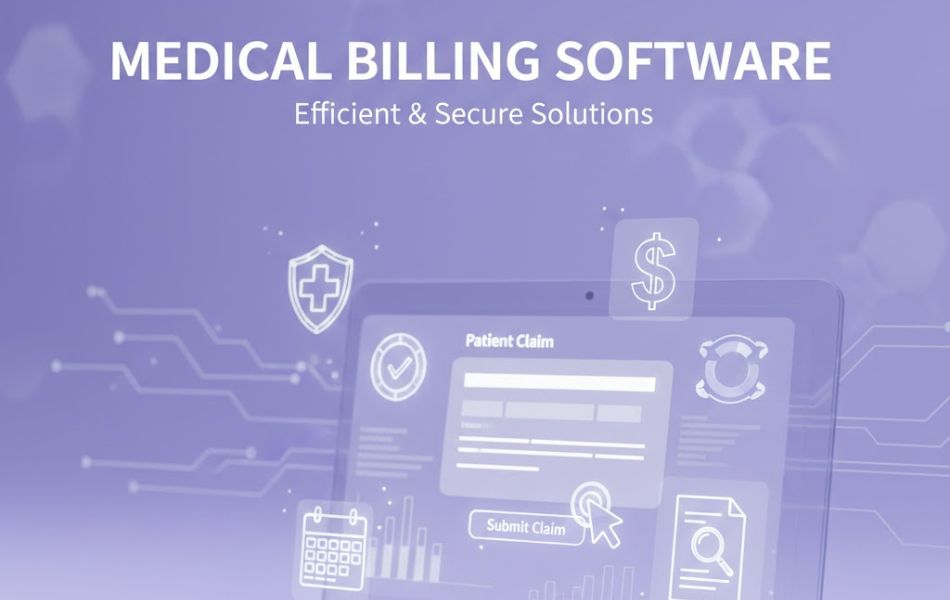
Healthcare providers need efficient tools to manage their billing operations effectively. Medical billing software has become essential for modern medical practices today. These platforms help streamline the entire revenue cycle from start to finish.
Manual billing processes often lead to costly errors and significant delays. Software solutions significantly reduce mistakes and speed up payment collection. They also provide better visibility into financial performance and operational efficiency.
The right billing software can transform how your practice handles claims. It automates repetitive tasks, freeing up staff time for patient care. Most importantly, it helps you get paid faster and more accurately.
Medical billing involves complex processes that require careful attention to detail. Every claim must include accurate patient information and correct procedure codes. Even small mistakes can result in denied claims and delayed payments.
Traditional manual methods are time-consuming and prone to human error. Staff members spend hours entering data and following up on claims. This approach is neither efficient nor cost-effective for growing practices.
Modern software solutions automate most of these tedious tasks very effectively. They verify insurance coverage before services are provided to patients. Claims are scrubbed for errors before submission to reduce rejection rates.
Studies show that approximately 80 percent of medical bills contain errors. Practices using quality software receive payments much faster than manual operations. The return on investment typically becomes evident within the first year.
Medical billing starts when a patient schedules an appointment with your office. Staff members collect insurance information and verify coverage before the visit. This step prevents billing issues that might arise after treatment.
During the visit, providers document all services and procedures they perform. Medical coders then translate these services into standardized billing codes. Accurate coding is crucial for proper reimbursement from insurance companies.
After coding, the claim is submitted electronically to the insurance payer. The payer reviews the claim and determines the approved reimbursement amount. Payment is then posted to the patient account once it is received.
According to the Centers for Disease Control and Prevention, proper coding is essential. Everything from viral infections to protozoal diseases requires accurate documentation. Each diagnosis must be coded correctly to ensure appropriate payment.
AdvancedMD offers a comprehensive cloud-based platform for medical practices today. It combines billing with electronic health records and practice management tools. The software works best for mid-sized to larger healthcare organizations.
This platform excels at automating and optimizing the complete billing cycle. It covers clinical workflows as well as financial and administrative tasks. Users can track key performance indicators like revenue per visit easily.
The system provides powerful reporting tools for data-driven decision-making. It helps practices identify bottlenecks and improve their revenue collection rates. AdvancedMD also offers excellent configurability to match specific practice needs perfectly.
Website: https://www.advancedmd.com
Kareo now operates under the name Tebra after a recent merger. This cloud-based solution is perfect for small to mid-sized practices. The interface is intuitive and easy for staff members to learn quickly.
Key features include robust appointment scheduling and automatic patient data entry. The claim scrubbing tool reviews billing data before submission for accuracy. This helps prevent rejections and speeds up the payment process significantly.
After merging with PatientPop, the platform gained enhanced marketing capabilities significantly. Tebra now offers a complete solution for practice growth and management. It helps providers deliver better care while optimizing their business operations.
Website: https://www.tebra.com
Athenahealth is a major player in the healthcare technology industry today. The Athena One platform provides medical billing and practice management together seamlessly. The platform serves healthcare providers across the country with connected network capabilities.
This platform maintains strict HIPAA compliance to protect patient information always. It integrates seamlessly with Laboratory Information Systems and Radiology Information Systems. The connectivity helps practices manage their entire workflow more efficiently.
athenahealth offers comprehensive coding solutions to ensure accurate claim submission always. The platform updates automatically to reflect the latest billing regulations. Users benefit from continuous improvements without additional upgrade costs or efforts.
Website: https://www.athenahealth.com
E-ClinicalWorks combines electronic health records with powerful billing capabilities very effectively. The platform uses a Clinical Rule Engine to boost billing efficiency. It has helped many organizations clear thousands of stuck claims successfully.
Live dashboards provide real-time visibility into practice financial performance daily. On-demand reporting helps identify trends and areas needing improvement quickly. The denial resolution features help practices recover revenue from rejected claims.
This software has proven effective for various types of healthcare organizations. It reduces denial rates significantly through the proactive claim management tools available. Staff members can monitor claim status and take action immediately when needed.
Website: https://www.eclinicalworks.com
CureMD delivers an all-in-one cloud solution for medical practices. It includes billing, electronic health records, and practice management in one package. The platform works well for practices of all sizes and specialties.
Specialty-specific templates make the software highly customizable for different needs. Users can access billing tools securely from anywhere with internet connectivity. Insurance verification features catch errors early before claims are ever submitted.
The integrated approach means patient care and billing happen on one platform. This eliminates the need to switch between multiple systems throughout the day. CureMD helps practices improve efficiency while reducing their administrative overhead costs.
Website: https://www.curemd.com
PracticeSuite supports over 150 medical billing and 60 electronic health record specialties. It serves everyone from solo practitioners to groups with 100 doctors. The platform can be used as a single module or a complete solution.
Its adaptability makes it suitable for various practice sizes and requirements. Complex scheduling scenarios are handled easily with flexible calendar management tools. Real-time dashboards give instant access to important practice metrics.
Security settings are granular, allowing precise control over user access levels. The software consistently exceeds customer expectations with reliable performance and support. Many practices report significant improvements in their revenue cycle after implementation.
Website: https://practicesuite.com
NextGen Healthcare offers budget-friendly services tailored to practice needs specifically. The medical billing software provides a strong return on investment for practices. It delivers comprehensive features without compromising on quality or essential functionality.
This solution streamlines billing workflows and reduces the administrative burden very effectively. Practice management and billing tools integrate seamlessly for better operational efficiency. NextGen focuses on delivering value for money across all its products.
The platform helps practices of various sizes improve their financial performance. Regular updates ensure the software stays current with changing billing regulations. Support teams are available to help users maximize their software investment.
Website: https://www.nextgen.com
DrChrono is a California-based company providing integrated healthcare technology solutions. The platform combines electronic health records with medical billing capabilities seamlessly. It streamlines administrative tasks while enhancing patient care and practice efficiency.
The software handles the complete billing cycle from scheduling to payment. Billing profiles reduce repetitive data entry for commonly used codes. Real-time insurance eligibility checks verify patient coverage during appointment scheduling.
Denial Analysis tools generate reports showing which services get rejected most often. This helps practices understand patterns and correct issues causing claim denials. The mobile-friendly design allows providers to manage billing anywhere, anytime.
Website: https://www.drchrono.com
EZClaim offers flexible medical billing and scheduling for smaller practices primarily. Both cloud-based and desktop versions are available for different preferences. It works perfectly for independent providers without large IT departments.
The user-friendly interface enables faster patient processing and shorter wait times. It assists users throughout the entire billing and scheduling process efficiently. Third-party EMR systems can integrate with EZClaim for expanded functionality.
This software is reliable and affordable, making it accessible to practices. It provides essential billing features without overwhelming users with unnecessary complexity. Many small practices appreciate its straightforward approach to billing management tasks.
Website: https://www.ezclaim.com
CollaborateMD is a cloud-based solution designed specifically for independent practices. Real-time claim submission and payer edits enhance first-pass acceptance rates. The platform appeals to smaller practices seeking efficiency without steep curves.
Its simplicity makes it easy for staff to learn and use effectively. Automation capabilities reduce manual work while ensuring accuracy in billing processes. Many practices choose CollaborateMD for streamlining operations, as it requires minimal implementation complexity.
The software helps practices get paid faster through efficient claim management. User reviews consistently praise its ease of use and reliable performance. Support teams provide helpful assistance when practices need guidance or troubleshooting.
Website: https://www.collaboratemd.com
Effective billing software must include automated claim scrubbing before submission occurs. This feature reviews billing data for errors that could cause rejections. It saves time and reduces the rate of denied claims significantly.
Payment posting should be automated to speed up revenue recognition processes. Manual posting takes too much time and increases the risk of errors. Automated systems post payments accurately within minutes of receiving them electronically.
Insurance verification tools confirm patient coverage before services are provided today. This prevents billing issues that might arise after treatment is completed. Verifying coverage upfront improves collection rates and reduces patient confusion later.
Denial management features help track and resolve rejected claims very systematically. Practices need to understand why claims are denied to prevent future issues. Good software identifies patterns and suggests corrections to improve acceptance rates.
Start by evaluating what features your practice needs most for daily operations. Consider claim submission, payment tracking, and integration with existing systems carefully. Make a list of must-have features versus nice-to-have options.
Ease of use is crucial because staff will use the software daily. Look for intuitive interfaces and helpful training materials from the vendor. Complex software with poor usability will frustrate your team and reduce productivity.
Scalability matters if you plan to grow your practice over time. The software should handle increasing claim volumes and additional users easily. Upgrading or switching systems later can be expensive and disruptive to operations.
Integration capabilities determine how well the software works with existing tools. It should connect seamlessly with your electronic health records and scheduling systems. Poor integration creates data silos and requires duplicate data entry unnecessarily.
Cost analysis should include implementation fees, monthly subscriptions, and potential investment returns. According to the American Medical Association, selecting compliant software protects providers legally. Calculate total ownership costs over several years for an accurate comparison between options.
Automated processes dramatically reduce errors compared to manual billing methods used previously. This leads to fewer denied claims and faster payment from insurance companies. Your practice gets paid more reliably and consistently each month overall.
Revenue cycles accelerate because claims are submitted and processed much faster. Money comes in quicker, which improves cash flow for your practice. Better cash flow means less financial stress and more resources available.
Staff productivity improves when administrative tasks are automated effectively throughout the day. Team members can focus more time on patient care instead of paperwork. This improves job satisfaction and allows better utilization of skilled staff.
Financial visibility increases with real-time reporting and analytics available instantly. You can see exactly how your practice is performing at any time. This enables better decision-making based on accurate current data.
Denied claims remain one of the biggest challenges facing medical practices today. Insurance companies reject claims for many reasons, including coding errors. Each denial requires staff time to investigate, correct, and resubmit properly.
Keeping up with changing regulations and coding updates takes considerable effort. Medical billing rules change frequently at both the state and federal levels. Practices must stay informed to avoid compliance issues and claim rejections.
Insurance verification can be time-consuming when done manually for every patient. Staff must contact insurance companies and wait on hold for verification. This takes valuable time away from other important practice operations daily.
Artificial intelligence is beginning to transform medical billing processes in meaningful ways. AI can predict claim denials before submission and suggest corrections automatically. This technology will become more sophisticated and widespread over the coming years.
Mobile accessibility is becoming standard as providers want access from anywhere. Cloud based solutions already enable this but apps are improving rapidly. Staff can manage billing tasks from tablets and smartphones very easily.
Patient payment portals are evolving to offer more convenience and flexibility. Patients want to pay bills online just like they pay expenses. Modern portals accept various payment methods and offer payment plan options.
Medical billing software has become indispensable for modern healthcare practices everywhere today. The right solution improves accuracy speeds up payments and reduces burden. It allows your team to focus more on patient care instead.
This guide covered ten excellent software options for different practice needs. Each solution offers unique strengths and features worth considering carefully before deciding. Your choice should align with your specific requirements, budget and goals.
Successful implementation requires thorough research and input from your entire team. Proper training and ongoing support ensure you get maximum value from software. Investing in quality medical billing software is crucial for your health.
Take time to evaluate your options and choose the best fit carefully. The right software will serve your practice well for many years. Your patients staff and bottom line will all benefit from this decision.


Sign up for my newsletter to see new photos, tips, and blog posts. Do not worry, we will never spam you.
Health Engine Journal is a modern health-focused blog dedicated to delivering clear, reliable, and well-researched information. Our goal is to educate, inspire, and support individuals, professionals, and learners in understanding the evolving world of healthcare. We simplify complex medical and wellness topics into practical knowledge you can trust.